All
Products
Resources
News
FAQ
Search









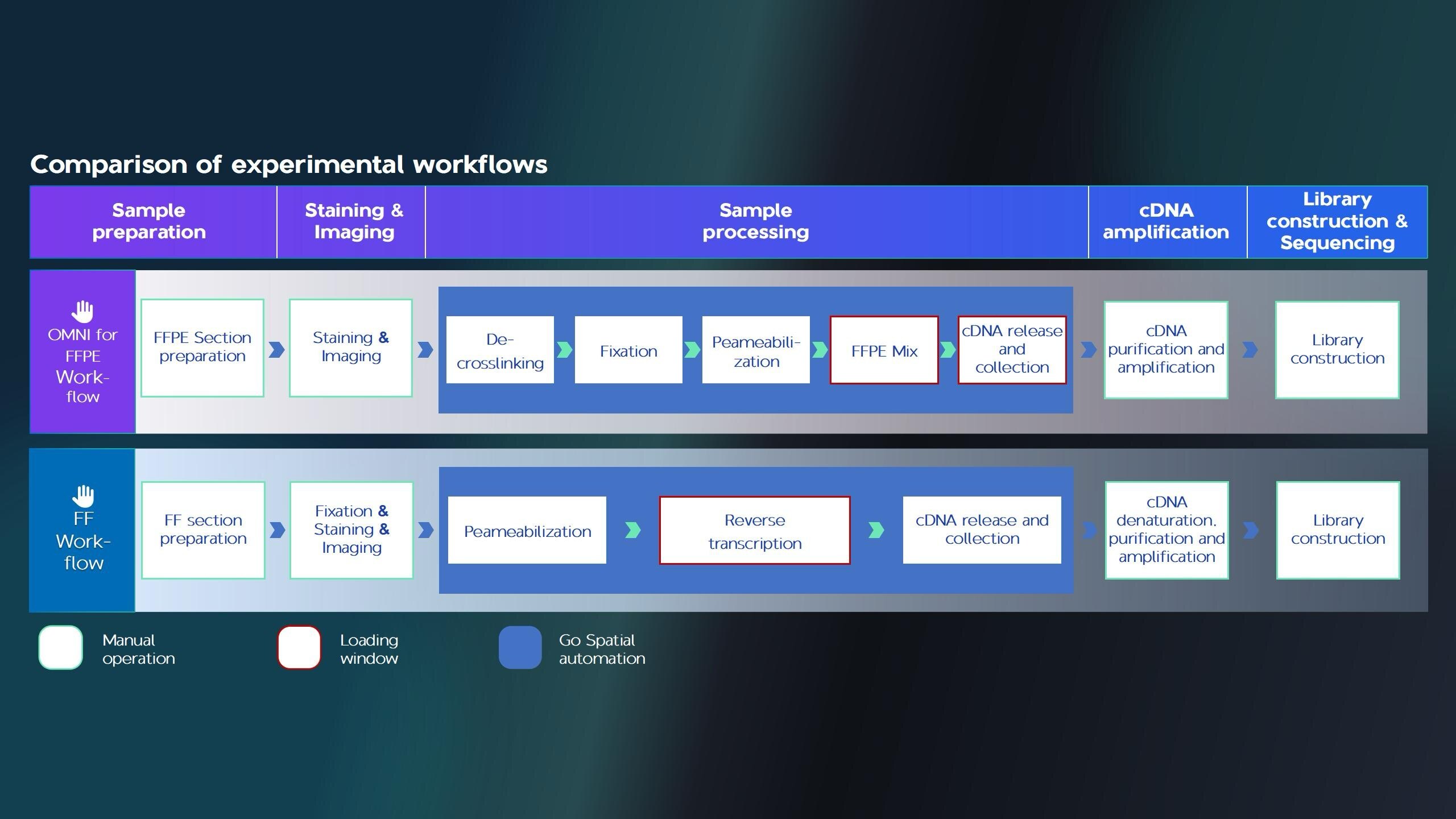
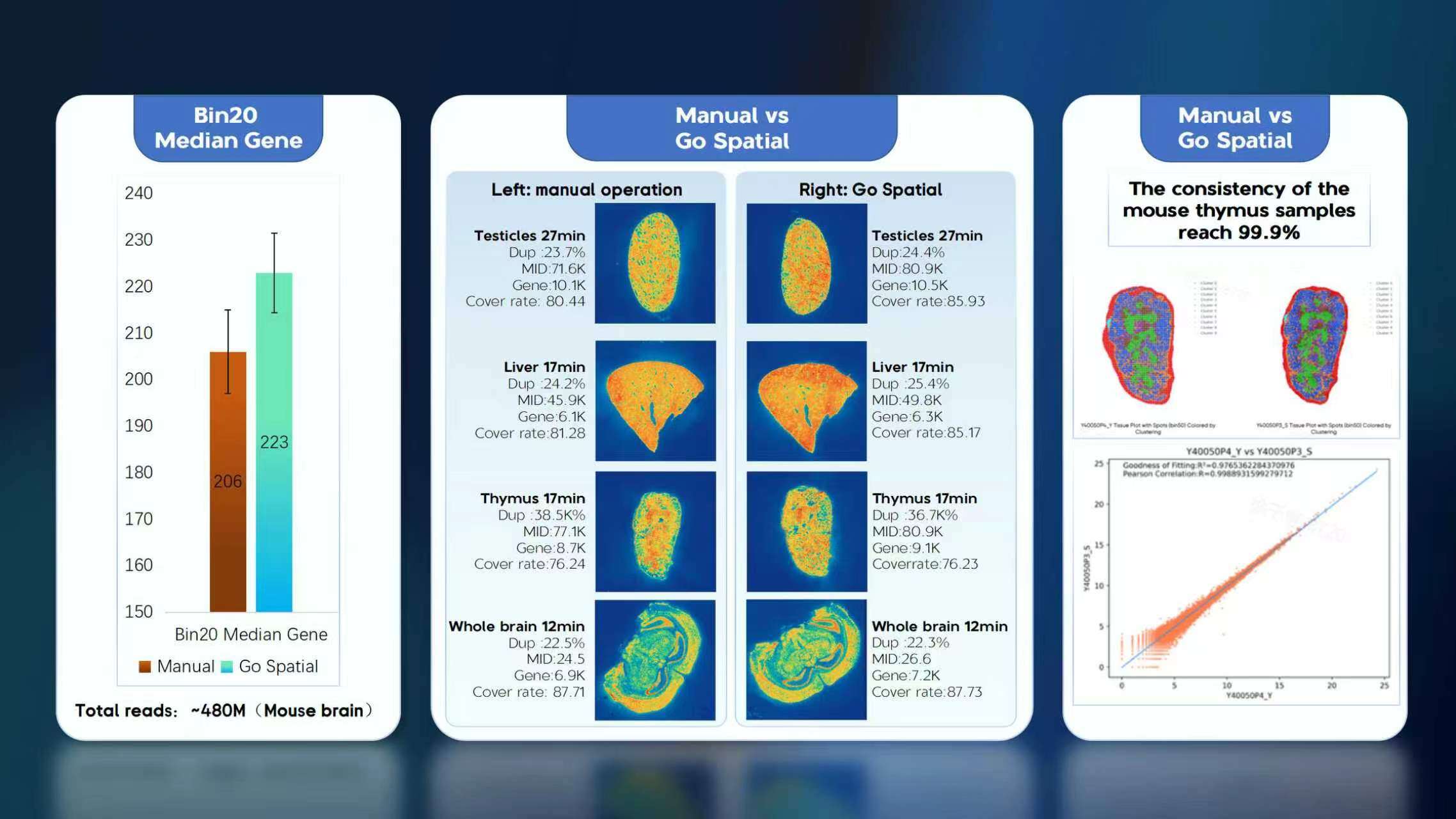
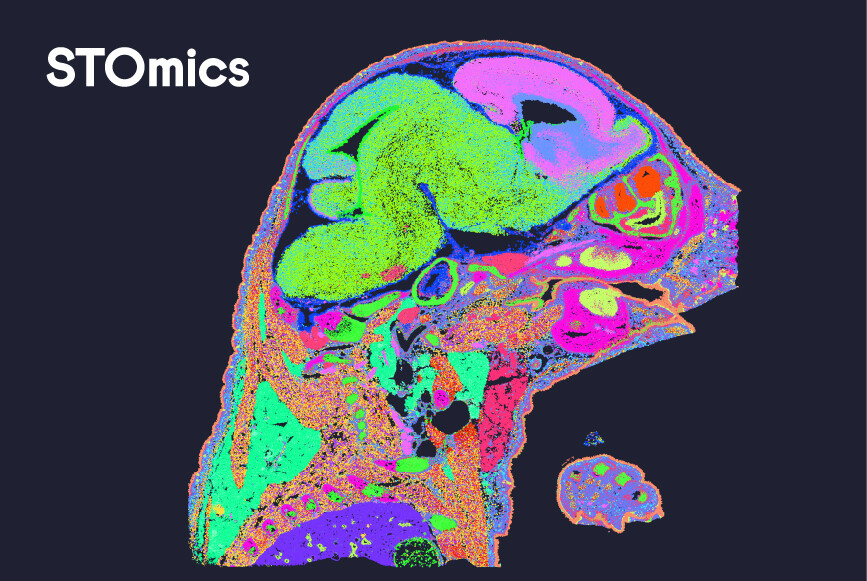
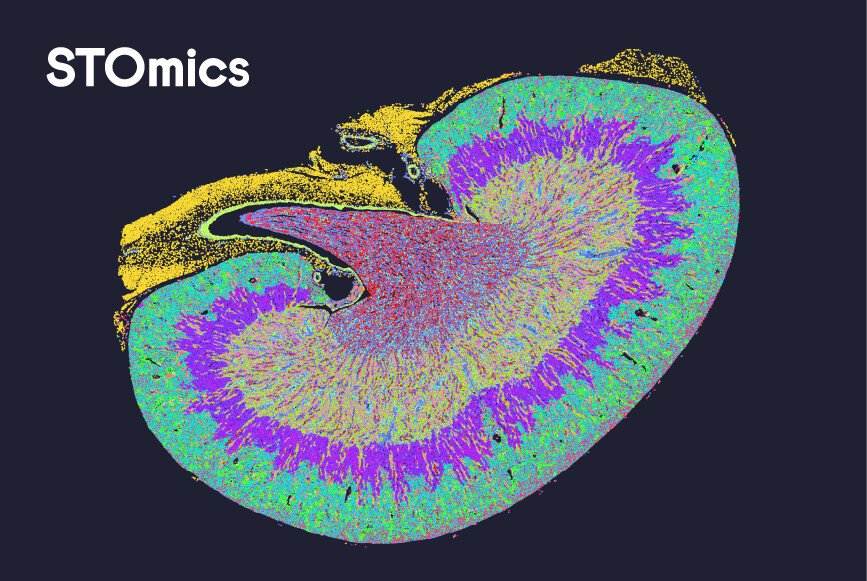
Spatial clustering patterns across four mouse tissue types (testis, liver, thymus, brain) are virtually indistinguishable between manual and Go Spatial runs. Mouse thymus Pearson R = 0.999. Comparable QC metrics including MID count, gene count, duplication rate, and tissue coverage observed across all tissue types.
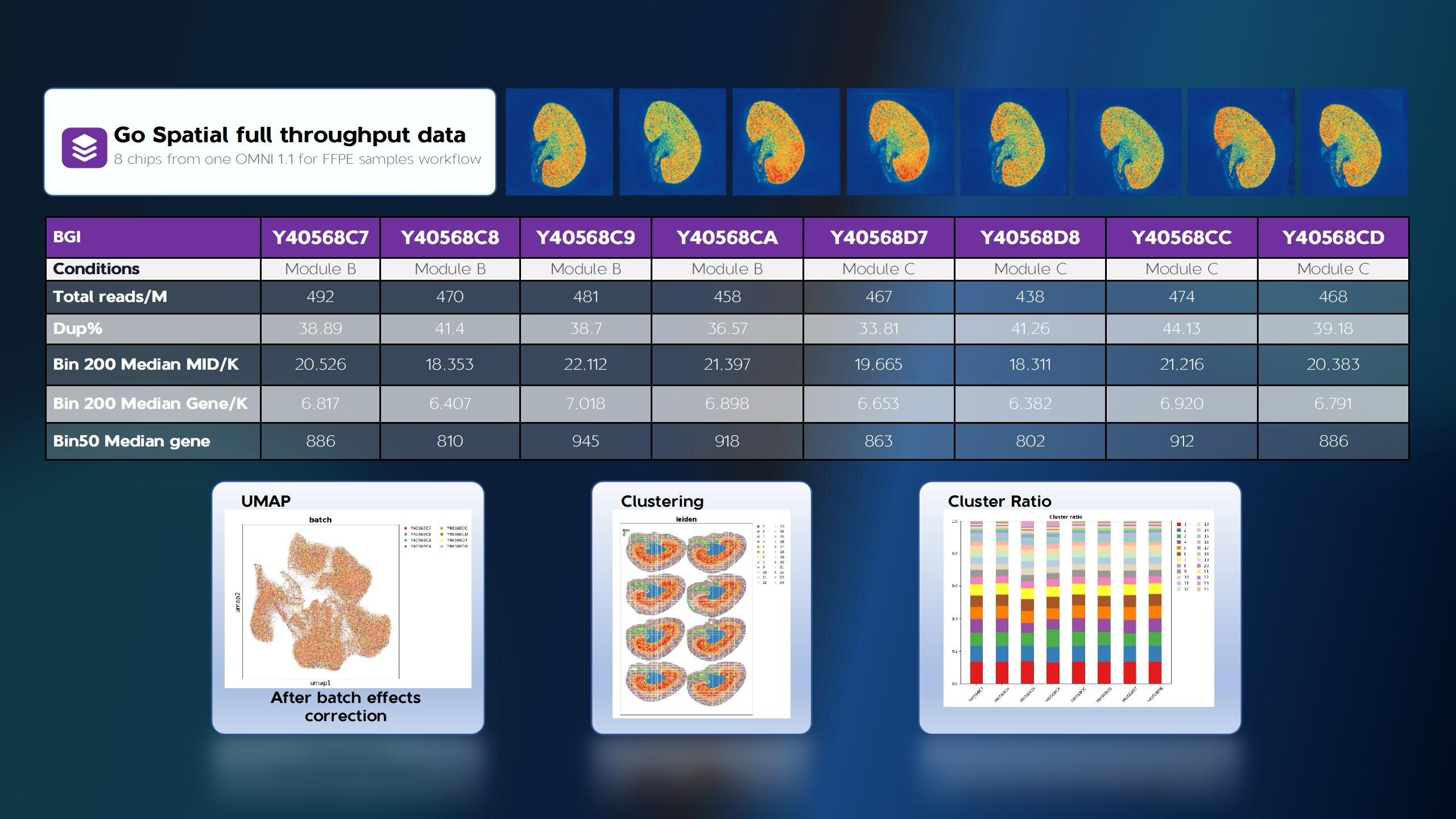
Full throughput validated: 8 chips from one OMNI V1.1 FFPE workflow demonstrated consistent performance across all chips.
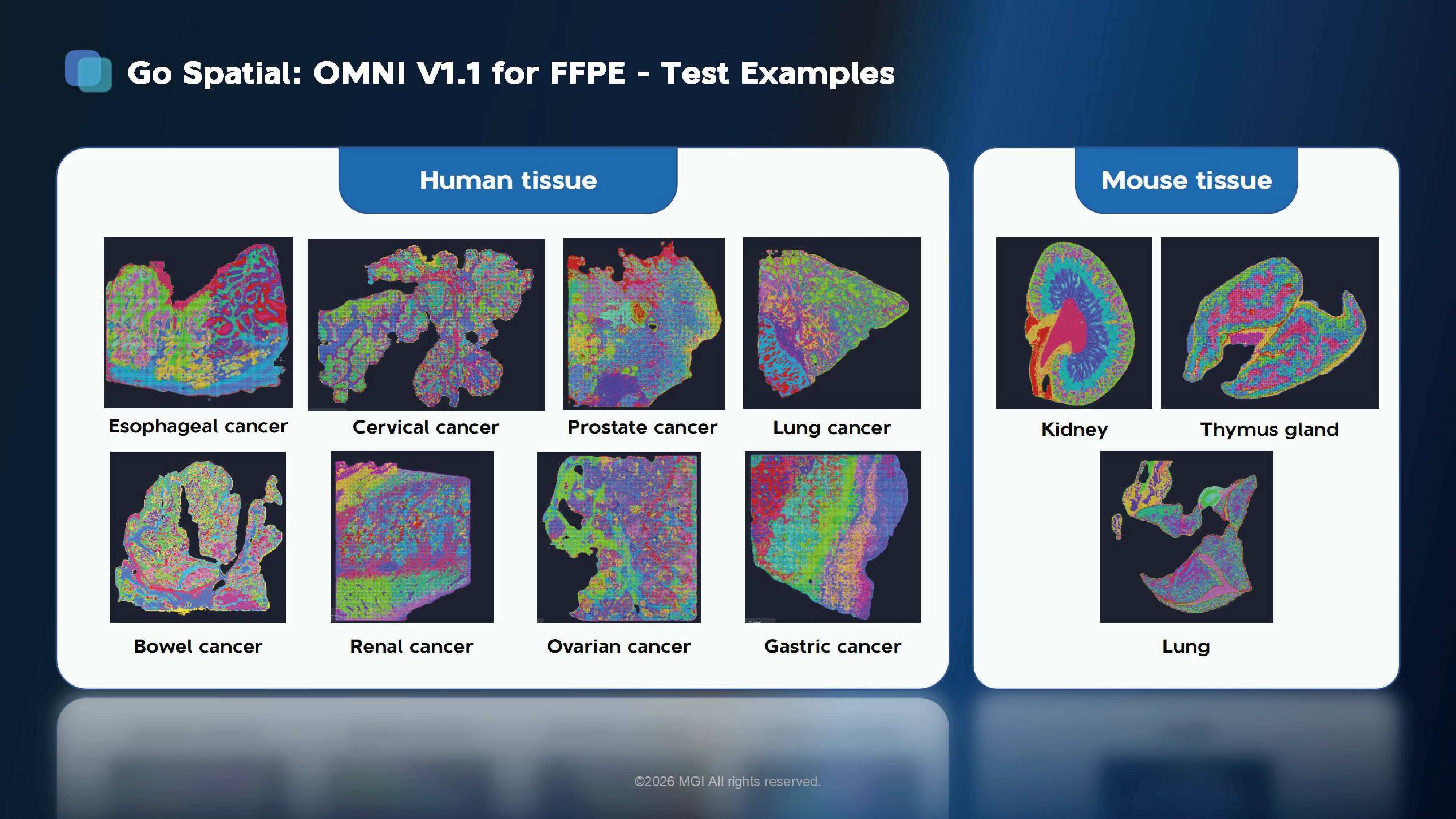
Compatible with a broad range of species and tissue types, Go Spatial has been validated on both fresh-frozen and FFPE samples, including multiple human cancers and normal mouse tissues.
For FF samples: the Stereo-seq Transcriptomics Set V1.3 for Go Spatial (Cat. No. 411ST13114), which includes the Transcriptomics T Kit, Chip T Slide, and Accessory Kit FF V1.3. For FFPE samples: the Stereo-seq OMNI Transcriptomics FFPE Set V1.1 (Cat. No. 411SN11114), which includes the Transcriptomics N Kit, Chip N Slide, and Accessory Kit FFPE V1.1. Additionally, a 16 Barcode Library Preparation Kit V1.1 (111KL11160) is required for library construction. Items labeled “-CG” are for US region only.
Go Spatial holds RUO certifications including CE, UKCA, EAC, and NRTL, allowing it to be sold and used in regions including the EU, UK, Eurasia, and North America. It is intended for Research Use Only (RUO) and is not for use in diagnostic procedures.
Go Spatial demonstrates 99.9% consistency with manual workflows (mouse thymus, Pearson R = 0.999). Spatial clustering patterns and gene expression profiles are virtually indistinguishable between manual and Go Spatial runs across four mouse tissue types. In mouse brain samples (~480M total reads), Go Spatial produced comparable or higher data metrics than manual processing.
Go Spatial supports all tissue types and all species with no limitation. It is compatible with both fresh-frozen(FF) and FFPE tissue samples. Validated examples include mouse brain, liver, thymus, testis, embryo, spleen, kidney, and tongue; human lung cancer, pancreatic cancer; monkey intestine; and numerous human FFPE tumor types including esophageal, cervical, prostate, lung, bowel, renal, ovarian, and gastric cancer tissues.
Go Spatial supports 2–12 chips per run for FF samples (6 slides × 2 chips) and 2–8 chips per run for FFPE samples (4 slides × 2 chips). With staggered scheduling, FFPE annual capacity is estimated at ~1,200 chips/year (50 wk × 3 runs/wk × 8 chips), and FF (known permeabilization time) at ~1,800 chips/year. All figures assume 1 technician and are validated by MGI R&D.