
Formalin-fixed paraffin-embedded (FFPE) tissues are widely used in clinical research because they preserve tissue architecture and enable long-term storage. However, in spatial transcriptomics workflows, FFPE samples are also a common source of data failure. Problems introduced during tissue sampling, fixation, storage, or transport are often irreversible and cannot be corrected at later stages of the workflow.
In this post, we highlight the most critical FFPE submission principles.
Confirm RNA Quality Before You Begin
In spatial transcriptomics, RNA integrity limits what you can learn from a sample. Poor RNA quality almost always leads to weak or noisy data.
Quick check to reduce risk:
Take 3–5 sections (5 µm thick) into a 1.5 mL tube for total RNA extraction.
Measure RNA quality — use only samples with DV200 ≥ 30% for downstream work. DV200 indicates the proportion of RNA fragments ≥ 200 nt in length, reflecting RNA integrity.
This upfront check lets you identify samples likely to fail before investing time and reagents downstream.
Tissue Block Fundamentals That Impact Data
FFPE blocks are more than storage units — they are the foundation of all downstream outcomes. A few physical characteristics consistently influence sectioning quality and spatial data capture.
Block integrity: Fully dehydrated and well-embedded blocks section more smoothly and reduce loss during processing.
Appropriate size: Keep blocks within 0.9 × 0.9 × 2 cm for 1 cm × 1 cm Stereo-seq chip N to help ensure even tissue coverage on-chip (Figure 1). It is important to adjust the size of the tissue block accordingly based on the chip dimensions. Improper sizing may result in uneven signal distribution or incomplete capture.
Transport and handling: Maintain 2 – 8 °C transport with cushioning. Rough handling and temperature extremes can introduce cracks or artifacts that show up later.
Proper block preparation sets up the rest of the workflow for success.
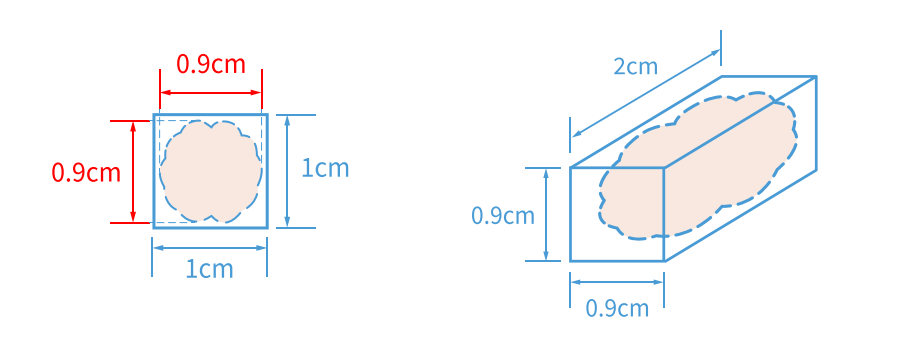
Figure 1. Recommended size specifications for an FFPE tissue block.
What "Good" Sections Actually Look Like
High-quality sections are a prerequisite for reliable spatial localization of transcripts.
Flat and intact: Wrinkles or fragmentation break the continuity of spatial signal and complicate analysis (Figure 2).
Right thickness: 5 µm is suitable for most tissues; consider 4 µm for lipid-rich specimens.
Separate packaging: Keep each section in its own container to avoid physical damage.
Time awareness: Aim to keep storage + transport < 1 week to minimize subtle degradation.
These simple practices help each section contribute robust, high-resolution data.
 and unacceptable (wrinkled or fragmented) examples..png)
Figure 2. Quality assessment criteria for FFPE tissue sections, showing acceptable (flattened) and unacceptable (wrinkled or fragmented) examples.
Correct Orientation on Tissue-Mounted Chips
Orientation matters — and mistakes here can't be fixed later.
Always place the B side down and maintain consistent orientation during mounting, reagent addition, and slide handling (Figure 3).
Process samples promptly, keeping total storage and transport under 1 week to avoid detachment or loss of tissue integrity.
A single orientation error can lead to tissue loss or unusable data — this is one area where disciplined handling really pays off.
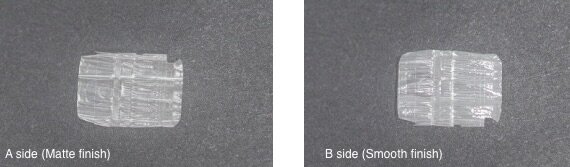
Figure 3. Illustration of the A/B sides.
Start with the Sample
In FFPE-based spatial transcriptomics, data quality is largely determined before sequencing begins. Careful control of tissue size, section morphology, RNA integrity, and handling discipline minimizes avoidable variability and significantly improves downstream data usability.
For complete technical specifications and step-by-step procedures, please refer to the FFPE Sample Preparation Guide available on the STOmics website. We offer a comprehensive portfolio of spatial transcriptomics solutions.
If you would like to learn more, please feel free to Contact Us or email us at info_global@stomics.tech.